
Document Liveness Detection SDK to Stop Document Fraud
Detect photographed-off-a-screen, scanned, or otherwise spoofed documents before they reach your verification workflow — designed to work alongside document recognition.
Source available on GitHub. See pricing & licensing →
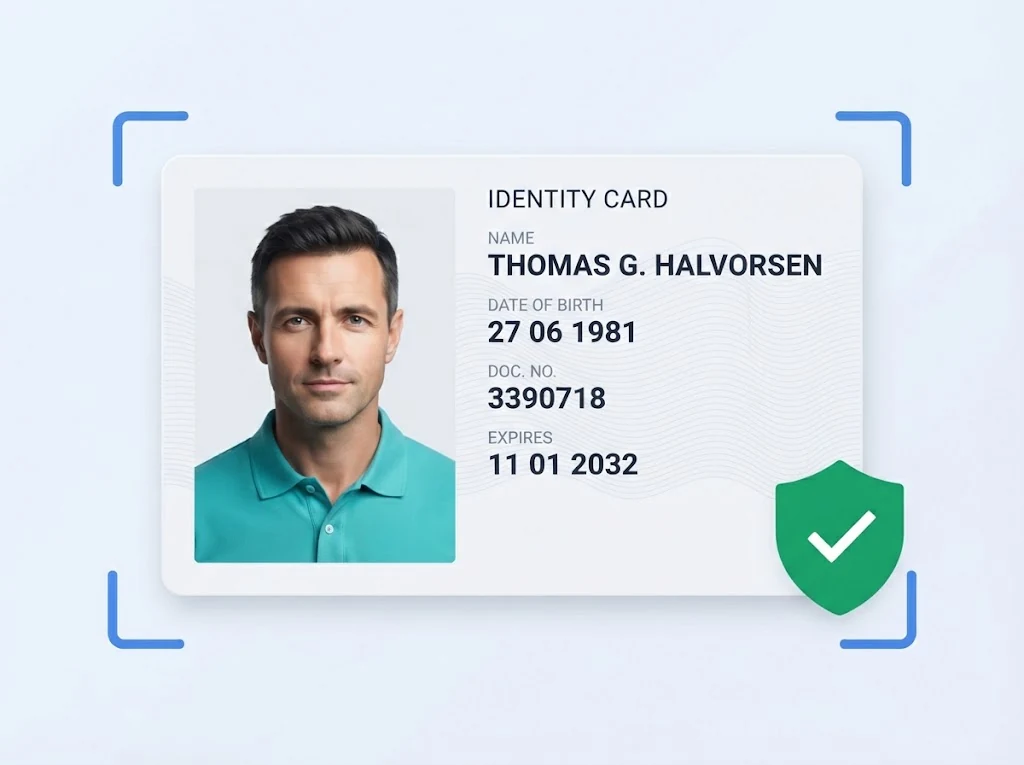 Authenticity check
s for the document capture itself
Document liveness detection analyzes how a document was captured, screening across every stage of the document-fraud pipeline — from a simple re-photograph through to a fully synthetic, template-generated fake — rather than checking for a single spoof type.
Photographed documents
Flags images that appear to be a photo taken of another photo or printout, rather than the original physical document.
Screen replays
Flags documents presented on a phone or monitor screen instead of a physical original.
Scans & copies
Flags scanned or photocopied reproductions submitted in place of the original document.
Edited & tampered documents
Flags signs of digital editing on an otherwise genuine document — altered fields, cloned regions, or inconsistent fonts and spacing.
Template-generated fakes
Flags documents that don't originate from a real physical capture at all — generated from a template or design file rather than photographed.
Injected & virtual camera feeds
Flags capture sessions where the video stream doesn't originate from a genuine camera reading a physical document in real time.
These six categories are the specific document-spoof types detected today; new attack variants are added to the detection model as they emerge in the field.
A checkpoint before data is trusted
Document Liveness Detection is designed to run alongside the ID Document Recognition SDK: recognition extracts the data, liveness detection evaluates whether the capture itself can be trusted. Used together, a low-liveness result can gate whether extracted data proceeds through your workflow.
Key capabilities
- ✓ Detection of photographed, scanned, or copied documents
- ✓ Screen-replay detection
- ✓ Designed to run alongside document recognition
- ✓ On-device and server-side deployment
Deployment
Runs on-device for immediate capture feedback or server-side for centralized policy, inside infrastructure you control — see on-premise deployment.
Integrate in the stack you already use
Where teams use the Document Liveness Detection SDK
KYC onboarding
Add an authenticity checkpoint before extracted document data is trusted downstream.
Fraud prevention
Reduce reliance on document images that could be reused, edited, or replayed across fraudulent applications.
Remote document submission
Add assurance to document capture flows where a physical original can't be inspected in person.
Frequently asked questions
Evaluate the Document Liveness Detection SDK
Get a technical walkthrough with our engineering team.